21 September 2026
Disability Steering Committee advances inclusive swimming framework
Royal Life Saving WA’s Disability Steering Committee has supported a new framework designed to strengthen access to inclusive swimming and water safety education for people with disabilities across Western Australia.
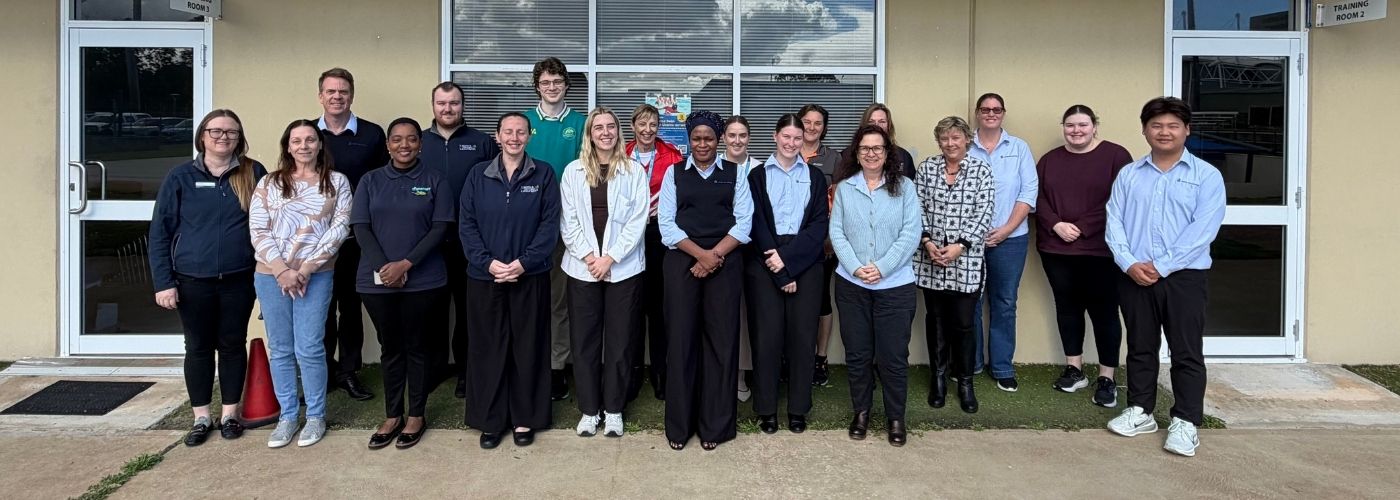
The Committee met at Royal Life Saving WA’s Mt Claremont Head Office on 20 August, marking its second meeting since launching in April.
Bringing together Royal Life Saving WA staff, aquatic industry representatives, State Government, disability service providers and organisations, advocates and people with lived experience, the committee provides advice and guidance to improve access and inclusion within swimming, water safety education and aquatic environments.
At its launch earlier this year, inclusive design and delivery of swimming and water safety education was identified as a priority area for the Committee.
In response, Royal Life Saving WA has developed the Specialised Access and Inclusion Lessons (SAIL) Framework, founded on the principle that every person, regardless of disability, developmental difference or additional support needs, should have access to safe, meaningful and empowering aquatic experiences.
The framework recognises the life-saving importance of swimming and water safety education, as well as the therapeutic benefits aquatic environments can provide, while seeking to address barriers that have traditionally limited equitable participation.
Through the SAIL endorsement model, Royal Life Saving WA will recognise aquatic facilities and swim programs that deliver safe, inclusive and high-quality swimming lessons for people with disabilities. Participating programs will be required to meet best-practice standards across areas including training, safety, accessibility, safeguarding and reporting.
Committee members supported the framework, with the next phase to focus on implementation and the development of resources to enable specialised access and inclusion lessons to be delivered across Western Australia. Members also reviewed proposed delivery resources that will form part of a practical resource pack for swim schools implementing SAIL.
Evaluation will be an important part of the Framework’s implementation, with Royal Life Saving WA’s research team briefing the Committee on plans to measure the program’s impact and help inform its ongoing development.
The meeting also provided an opportunity to reflect on the impact of the Swim and Survive Fund during 2025/26 and its role in helping remove financial and accessibility barriers to swimming and water safety education.
Royal Life Saving WA General Manager Training Trent Hotchkin said improving access to swimming and water safety education was critical to ensuring children of all abilities have the opportunity to develop lifesaving skills.
“Every child should have the opportunity to learn swimming and water safety skills, but we know that programs don’t always meet the needs of children with disabilities,” Mr Hotchkin said.
“The SAIL Framework gives swim schools a practical way to provide safe, inclusive and high-quality lessons that recognise individual needs. By working alongside the disability community and aquatic industry, we can remove barriers to participation and give more children the opportunity to develop skills that could one day save their life.”
The importance of this work is underscored by the increased drowning risk experienced by some children with disabilities. According to Autism Swim, autistic children are up to 160 times more likely to drown than their peers, while drowning accounts for 91 per cent of accidental deaths following wandering incidents.
Children with epilepsy, Down syndrome and certain heart conditions can also face an increased risk of drowning, while physical, cognitive, sensory and social barriers may make participation in mainstream swimming programs more difficult.
The Disability Steering Committee will continue to support Royal Life Saving WA’s work to improve participation and outcomes for people with disabilities through adaptive programs, accessible aquatic environments and collaboration across the disability and aquatic sectors.
Its work forms part of Royal Life Saving WA’s broader commitment to ensuring all Western Australians have the opportunity to develop the skills and confidence to be safe in, on and around the water.