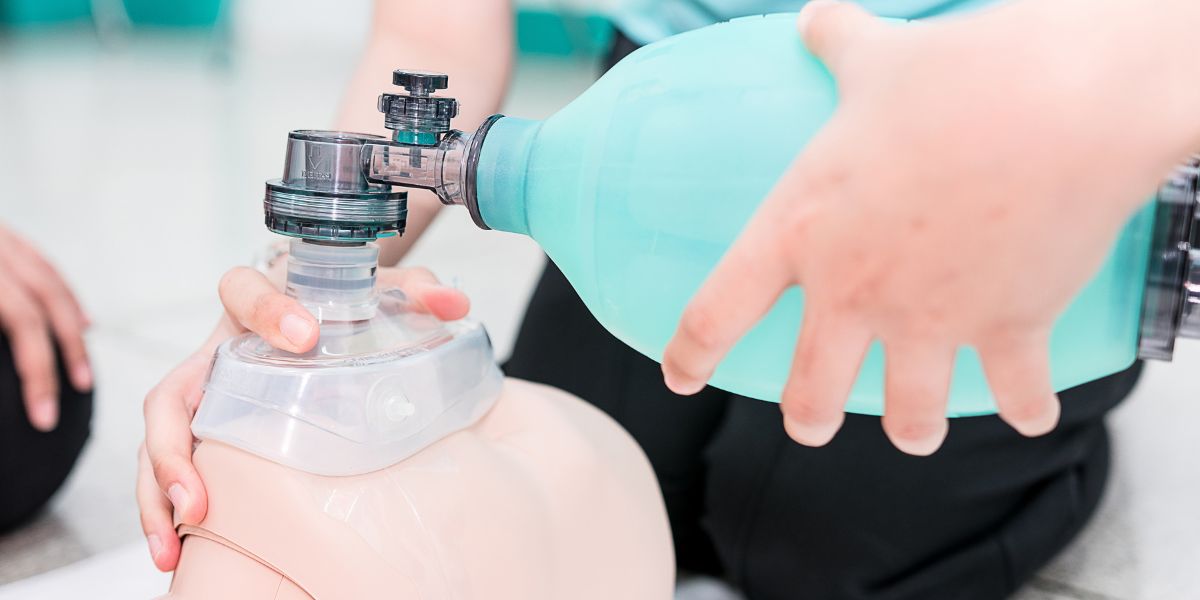
A bag valve mask (BVM) is an advanced method of providing rescue breaths during CPR, used by trained rescuers as an alternative to mouth-to-mouth resuscitation. It allows for more controlled delivery of breaths and can be used in conjunction with oxygen therapy.
What is a Bag Valve Mask?
A bag valve mask (BVM) is a manual resuscitation device used to provide breathing support to a person who is not breathing or not breathing effectively.
A BVM consists of:
- A self-inflating bag that refills automatically after being squeezed
- A face mask that fits over the mouth and nose
- An expiratory valve that allows exhaled air to escape
- A positive end-expiratory pressure (PEEP) valve to maintain pressure in the lungs after exhalation and help prevent lung collapse
- A pop off (or pressure relief) valve which prevents over-pressurisation of the lungs
- An oxygen inlet for attaching a supplemental oxygen supply if available
Masks and bags come in different sizes (infant, child, adult). Selecting the correct size is essential for a correct fit and effective ventilation.
How to use a Bag Valve Mask
ANZCOR recommends two trained rescuers work together to provide BVM ventilation. One rescuer maintains the airway and holds the mask in place with a secure seal, while the second rescuer delivers breaths by squeezing the bag.
- Select the correct mask size and bag
- Place hands on either side of the patient’s head and use a jaw thrust to create a head tilt and open the airway
- Position the mask over the mouth and nose and use a claw grip to secure the mask and ensure a tight seal
- Remove the pop off valve cap
- Deliver two rescue breaths with controlled squeezes of the BVM for 1-2 seconds after every 30 chest compressions
Safe and effective use of a Bag Valve Mask
Effective BVM ventilation delivers 21% of oxygen and requires an open airway, a good mask seal and steady, controlled breaths. Poor technique can reduce effectiveness and increase risk of lung injury.
As you deliver manual ventilation, focus on correct positioning, a tight seal and gentle breaths. Use the rise of the chest as your guide.
Refresh your skills with an Advanced Resuscitation course and build confidence in performing CPR and using equipment such as bag valve masks and oxygen therapy.