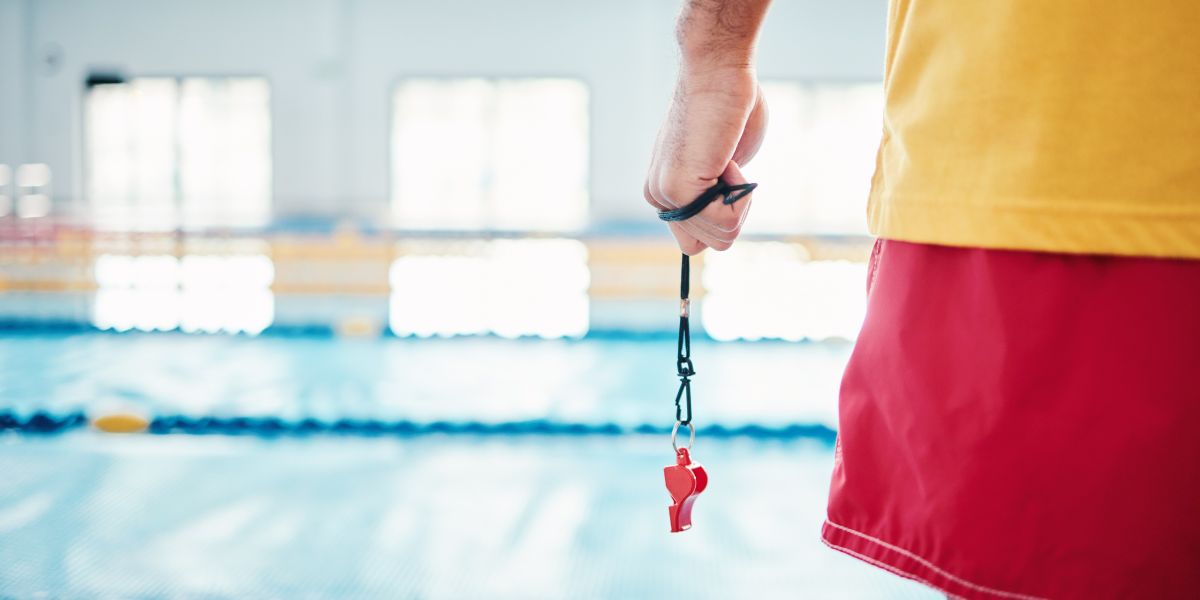
Busy aquatic facilities come with plenty of distractions, and these can quickly get in the way of effective pool supervision.
As a lifeguard, to provide effective supervision you must be prepared for whatever situation or emergency arises. That starts with recognising what might distract you and having simple strategies in place to manage those distractions before they affect your focus.
Examples of External Distractions
External distractions come from the environment around you and be difficult to prevent or fully control. Below are some common external distractions and simple ways to manage them while on duty.
Kids misbehaving: remind children of the rules and clearly explain expectations and consequences if behaviour continues (e.g. 3 strikes and you're out).
Patrons asking questions or wanting to talk to you: Avoid turning your back on the pool and keep interactions brief when answering questions or providing instructions.
Environmental conditions: excessive noise, heat and humidity, glare and rain can reduce the focus of a lifeguard on duty. Work with your team to identify practical ways to reduce the impact of these conditions while on duty.
Examples of Internal Distractions
Internal distractions come from within you and can be physical or mental. Maintaining focus for long periods of time is often one of the biggest mental challenges lifeguards face while supervising. Common internal distractions include:
Fatigue: if you're tired, your concentration will be impacted. Ensure you get a decent sleep before turning up for work.
Sickness: being unwell will affect your ability to concentrate and maintain patron safety at the pool.
Dehydration: ensure you drink plenty of fluids to avoid becoming dehydrated while on duty.
Stress: being stressed or having something else on your mind can greatly reduce your ability to effectively supervise as your mind wanders. Focus on the job at hand and what you are there to do.
What you can do
Talking openly with your team can help identify and manage these distractions. Ask each other:
- “What distracts us when we are on deck?”
- "What draws our focus away from the patrons in the water?”
Work together to discuss practical ways to address these issues.
Before each shift, take a moment to check in with yourself using the IM SAFE framework:
Injury/Illness
Am I fit for work? Do I have any injuries, or am I suffering from any illness that will affect my performance?
Medication
Am I under the effect of any medication that may cloud my judgement or slow my reaction times?
Stress
Am I under stress from either work or home? Do my thoughts keep wandering to something other than my job?
Alcohol or Drugs
Am I under the influence of either alcohol or drugs?
Fatigue
Am I tired or not adequately rested to fulfil my duties and supervise effectively?
Expertise
Am I confident in my ability to complete all aspects of my role? Is there extra training I need for a specific task or area of my work?