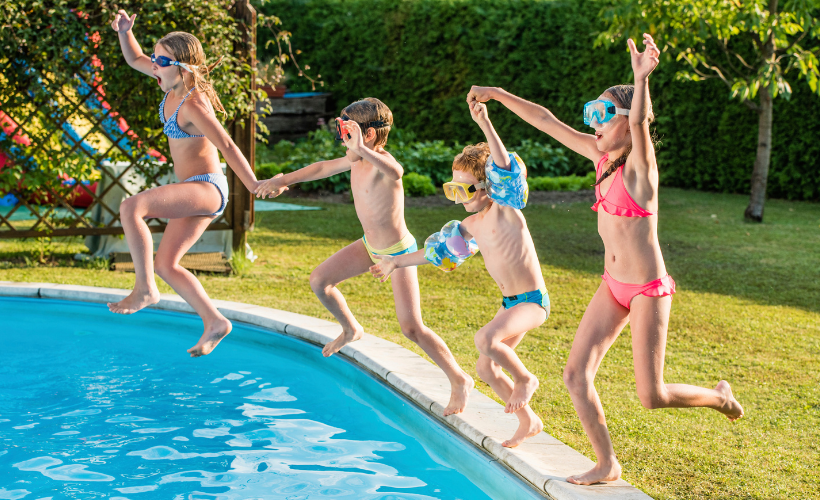
Supervising a group of children around water can be difficult for a few reasons.
- Between pool toys and splashing it can be hard to see all areas of the pool.
- Different children have different swimming abilities and you may not be aware of the skill level of each child you are supervising.
- It is easy to become distracted by one child, diverting your attention from the other children in the pool area.
Tips for a safe pool party
If you are hosting, or have been asked to help supervise at a children's pool party, there are some important things to consider.
1. Establish rules
It is helpful to establish some rules for the party (e.g. no running, no pushing) and discuss these with the children before they are allowed to enter the water.
2. Explain the pool layout
The children at the party may not be familiar with the pool, so explain where the deep end is, where the shallow end is, and the location of any steps or ladders that they can use to climb to safety.
3. Understand abilities
You may not know the different swimming abilities within the group, but it's important to learn who the swimmers and non-swimmers are within the group. In particular, identify those with limited ability.
4. Designate a supervisor
Before anyone enters the pool, designate a child supervisor. Multiple supervisors should be assigned if there is a large group of children present. Have the supervisor/s wear a brightly coloured hat or similar, that everyone is aware of and can be easy to spot by those in the pool.
5. Supervisor replacement
If the supervisor needs to leave the pool area for any reason, pass the hat or bright item to another adult who will then assume supervision duties.
6. Emergency plan
Have an emergency plan in place in case anyone gets into difficulty. This involves:
- Calling 000
- Starting CPR
- Supervision of the other children
The importance of active supervision
Young children are naturally curious and attracted to water but can lack an understanding of the concept of danger. Children drown quickly and silently, usually without calling out for help. This makes active supervision vital.
Age groups most at risk
Children under five are considered a priority population when addressing drowning reduction in Australia. However, Royal Life Saving WA recommends some level of supervision for all children under 15:
- Children under five: be in the water, within arm's reach and actively supervising
- Children aged 5 to 10: actively supervise from the water’s edge
- Children aged 11 to 14: regularly check up on them