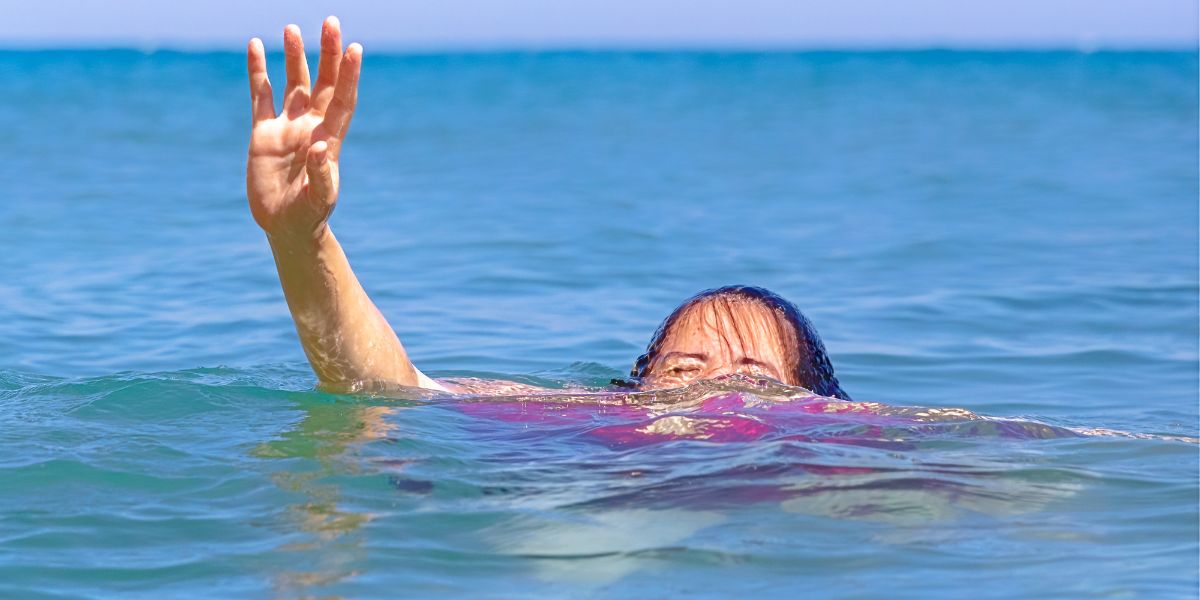
 Drowning doesn’t always look the way many people expect. It is not always loud or obvious, and it may not involve waving arms, big splashes or shouts for help. In many cases, a person in trouble is using all their energy just to keep their mouth above the water and take their next breath.
That means drowning can be easy to miss, especially in a busy pool, at the beach or around a group of people playing in the water. Someone may look like they are simply floating, treading water or mucking around when they are actually struggling.
Drowning can appear differently depending on a person's swimming ability, their level of panic, whether they are injured, and how long they have been in trouble.
By learning these signs, you can spot trouble early and respond sooner while keeping yourself and others safe.
The non-swimmer
A person with little or no swimming ability is often at the highest risk of drowning. They may panic when they realise they cannot stand, float or move safely through the water, even in shallow areas.
Look for someone who is:
- Upright or vertical in the water
- Moving their arms as if they are “climbing a ladder”
- Using little or no effective leg movement
- Going under the water repeatedly
- Unable to move toward safety
- Trying to grab onto another person or object
The weak swimmer
A weak swimmer may be able to stay afloat for a short time but struggle to return to safety. They may be tired, out of their depth or unable to cope with difficult conditions.
Look for someone who is:
- Angled in the water, rather than upright
- Tilting their head back to keep their mouth clear
- Looking towards shore, safety or other people
- Using their arms and legs but making little progress
- Trying to hold onto something that floats
The injured swimmer
An injured swimmer may still be able to float or call for help, but they may not be able to swim properly.
Look for someone who is:
- Holding an injured body part
- Calling for help
- Floating or moving awkwardly
- Struggling to use one arm or leg
- Able to hold a flotation aid if one is provided
The unconscious swimmer
An unconscious person can be very difficult to spot because there may be no splashing, noise, or movement. They may be face-up or face-down in the water.
Look for someone who is:
- Not moving
- Not responding
- Floating at the surface or below it
- Near bubbles, disturbed water or the last place they were seen
What to do
If you think someone is drowning, call for help immediately. At a patrolled beach or aquatic facility, alert a lifeguard as quickly as possible.
Follow the 4A’s of aquatic rescue to assess the situation, act safely, and protect yourself from danger. Do not enter the water unless you are trained and it is safe to do so.
Where possible, follow the order of rescues and use the safest option first, such as talking, reaching or throwing a flotation aid, before considering entering the water.