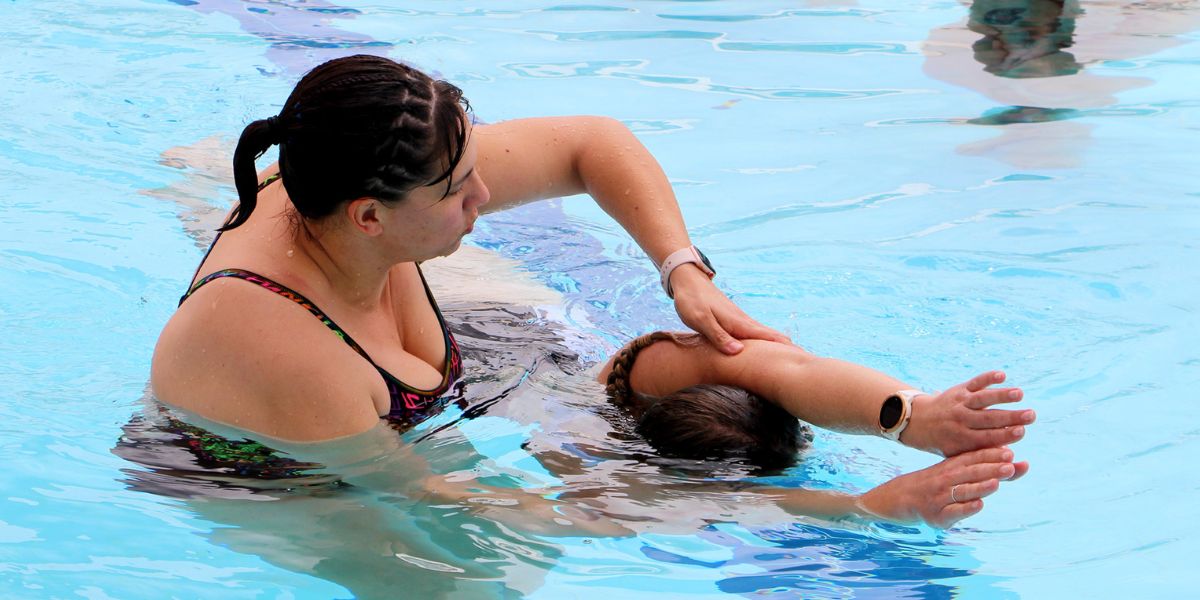
 Spinal injuries in the water usually happen when a person’s head strikes a hard surface, such as during a dive into shallow water. Most aquatic spinal injuries affect the neck, where sudden bending on impact places pressure on the spinal cord. This pressure can cause permanent spinal damage.
What to look for
- Loss of consciousness
- Lack of movement, numbness or tingling of the muscles
- Visual problems
- Pain
- Shock
- Potential swelling, redness or lacerations at the site of the injury
Treating a spinal injury
If a person is found unconscious in the water, they must be treated as having a suspected spinal injury unless the cause of unconsciousness was witnessed and a neck or back injury is highly unlikely.
The immediate priority is to establish and maintain an open airway while preventing any movement of the head or spine. If there is only one rescuer, immobilisation may not be possible if resuscitation is required. When more than one rescuer is available, spinal immobilisation can be achieved using the vice grip technique while rescue breathing is performed in the water.
If CPR is required, the casualty must be carefully removed from the water with minimal spinal movement, and CPR commenced on land.
Watch the videos below to learn more about managing potential spinal injuries in shallow and deep water.
To learn more about the different types of aquatic rescue and open the door for a great career in the aquatic industry, why not consider our Pool Lifeguard course: