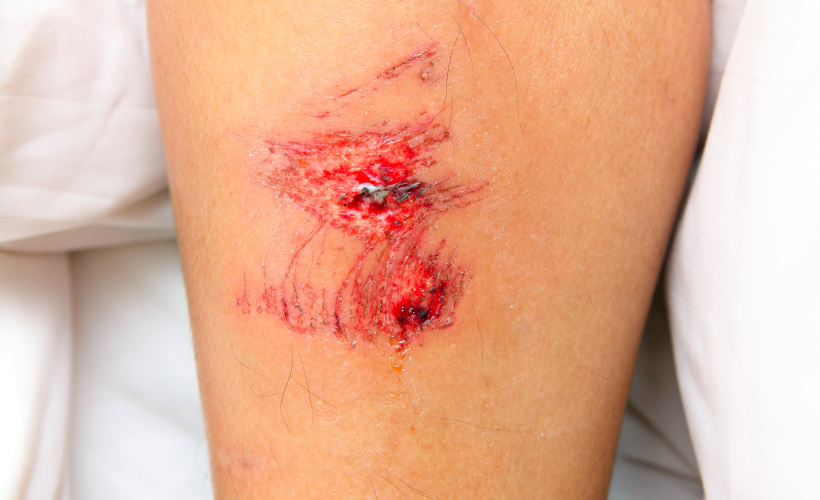
Bleeding, technically known as haemorrhaging, is the loss of blood from the circulatory system. Bleeding can occur internally, where blood leaks from blood vessels inside the body, or externally, either through a natural opening such as the mouth or nose, or through a break in the skin.
Bleeding may be due to a medical problem or may be caused by blunt or penetrating trauma, which can result in different types of wound. In terms of first aid, it is important to manage the bleeding first, while preventing the risk of infection before attending to the wound itself.
Treatment for external wounds will depend on the severity of the wound, but will generally follow the same steps.
Types of external wounds
Treatment for external wounds
- DRSABCD - call 000 for an ambulance
- Protect yourself with gloves, eye protection and a face mask to avoid contact with any blood or fluid
- Apply direct pressure to the wound immediately and squeeze the edges of the wound together if possible. Blood loss can cause the patient to suffer from severe shock, so avoid any delays in applying direct pressure.
- If possible, make the patient comfortable by sitting or lying down
- Inspect the wound. If foreign materials are present on the surface of the wound, lightly brush off using a sterile pad, or wash with saline solution if possible.
- DO NOT remove any foreign materials that are embedded in the wound, as this can increase the bleeding and cause further injury.
- Apply a clean pad over the wound, and a firm bandage around the wound area.
- DO NOT bandage the wound too tightly as this can cut off circulation
- If an object is protruding, DO NOT apply pressure on or over the object. Instead, apply pressure by padding around the object.
- After bandaging, check circulation below the wound
- If the bleeding does not stop, remove the bandage (leaving the pad in place) and apply a second pad over the first. Re-bandage firmly.
- DO NOT remove the first pad as this may remove any clots that are forming and increase the bleeding.