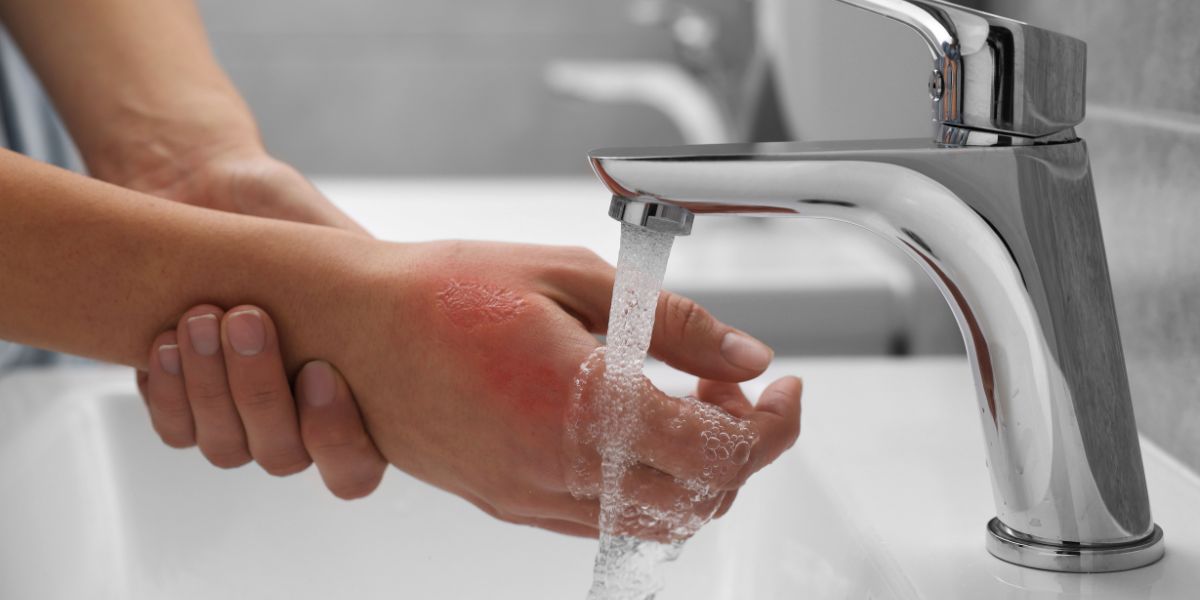
A burn is a type of soft tissue injury that occurs when part of the body is in contact with heat, certain chemicals, extreme cold, radiation or electricity for a long enough period to cause damage.
Burns can range from minor injuries affecting only the surface of the skin to severe injuries that damage deeper tissues. The severity depends on how deep the burn is and how much of the body is affected. Burns usually damage the skin, but inhalation injuries or electrical burns can also affect internal organs. Severe burns may require urgent medical care.
Learn more and test your knowledge about burns
Symptoms
Superficial (first-degree) and partial thickness (second-degree) burns affect the outer layers of skin. Symptoms may include:
- Red or inflamed skin
- Pain or tenderness
- Swelling
- Blistering
Full thickness (third-degree) burns extend into deeper tissues under the skin.
- Skin may appear white, brown or black
- Dry or leathery skin
- Little or no pain due to nerve damage
- Loss of skin layers
Prevention
Many burns and scalds occur in everyday environments such as kitchens, bathrooms and workplaces. They are a common cause of injury in young children and toddlers because of their mobility and natural curiosity.
Keep children away from cooking areas and supervise them closely around hot surfaces. Never leave hot liquids unattended and always check the temperature of food or bath water before use.
Handle chemicals carefully and wear protective clothing or eyewear when needed. Keep electrical equipment in good condition and maintain working smoke alarms in the home help reduce the risk of burn injuries from fires.
Treatment
- Remove the patient from the source of the burn
- Place the burned area under cool, running water for at least 20 minutes
- Remove jewellery, watches or tight clothing near the burn before swelling develops. If clothing is stuck to the burn, leave it in place
- Cover the burn with a clean, loose, non-stick dressing
Call an ambulance (000) immediately if the burn is deep, larger than a few centimetres, involves the face, hands or genitals, was caused by chemicals or electricity, or if breathing becomes difficult.
What NOT to do
- DON'T apply ice directly to the burn
- DON'T apply creams, lotions or ointments
- DON'T remove clothing or materials stuck to the burn site
- DON'T pop blisters or peel damaged skin
- DON'T cover burns tightly or with adhesive dressings