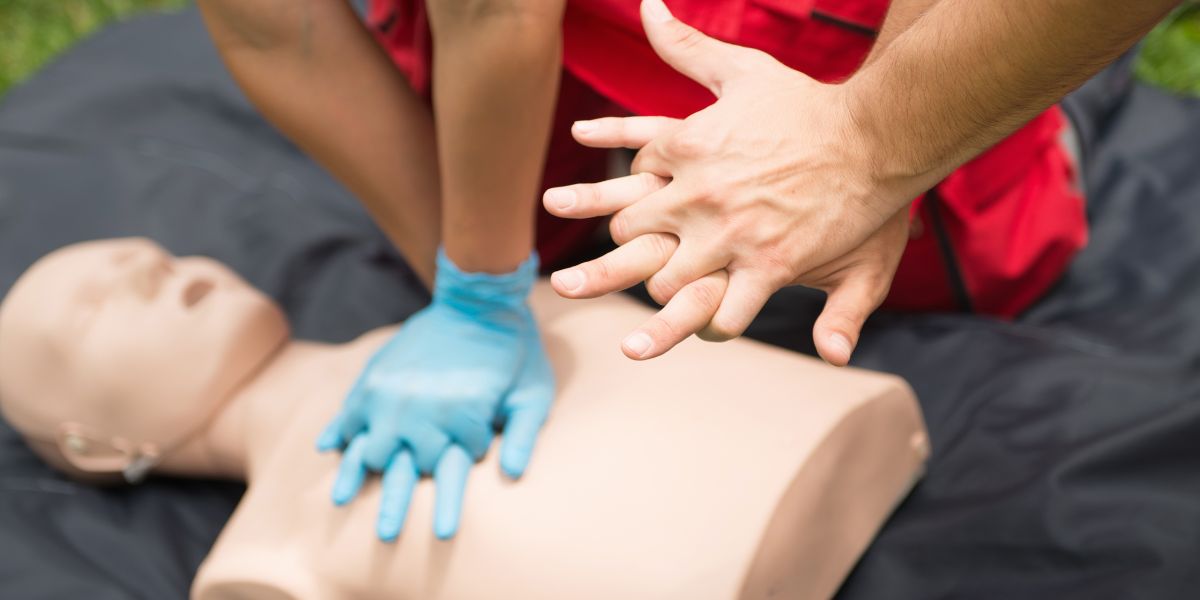
 Most of us have a general idea of what cardiopulmonary resuscitation (CPR) involves. Chest compressions and rescue breaths work together to keep oxygen moving around the body when someone is unconscious and not breathing normally.
But when it comes to CPR and cardiac arrest, there are still plenty of myths out there. Some of them can cause hesitation in an emergency, and that hesitation can cost valuable time.
So how well can you separate fact from fiction?
Myth: Cardiac arrest is the same as a heart attack
TRUTH: These two conditions are not the same.
People of any age or fitness level can experience cardiac arrest, often without any warning or medical history. Assuming someone is too young or healthy can delay CPR and reduce their chance of survival. Acting quickly is critical. Assuming someone is “too young” or “too healthy” to be in cardiac arrest can delay CPR. Early action is one of the biggest factors in survival, so it is always better to act quickly and call for help.
Myth: People who need CPR are usually older or already unwell
TRUTH: Cardiac arrest can happen to anyone.
It does not discriminate by age, fitness level, gender or background. Many people who experience cardiac arrest have no known medical conditions and appear fit and healthy.
Assuming someone is “too young” or “too healthy” to be in cardiac arrest can delay CPR. Early action is one of the biggest factors in survival, so it is always better to act quickly and call for help.
Myth: CPR is exactly the same for adults, children, and infants
TRUTH: The steps are similar, but there are important differences.
The core principles of CPR stay the same across all ages, but the technique changes slightly. For example, chest compressions for children and infants require less force than those used for adults and rescue breaths are smaller.
Learn more about CPR for infants and children to ensure you can respond safely and effectively in any situation.
Myth: You can be sued if you hurt someone while performing CPR
TRUTH: In Australia, Good Samaritan laws protect people who provide emergency assistance in good faith. If someone is in cardiac arrest, CPR gives them a chance of survival. Without it, their chance is very low.
Myth: You should only perform CPR if you are fully trained
TRUTH: Doing something is far better than doing nothing.
Many people hesitate to start CPR because they worry they have not been trained, or worry that they might do it incorrectly. In a cardiac arrest, waiting for a trained person can waste precious minutes.
When you call Triple Zero (000), the emergency call-taker can talk you through what to do until help arrives, you do not need to remember every step perfectly to make a difference. Your willingness to act could save a life.
Myth: You can cause more harm than good by doing CPR
TRUTH: The biggest risk is not acting at all.
It is normal to worry about hurting someone while performing CPR. Chest compressions can sometimes cause injuries such as cracked ribs, but these injuries are treatable and far less serious than the outcome of untreated cardiac arrest.
Without CPR, the brain is deprived of oxygen and damage can begin within minutes. CPR helps keep oxygenated blood moving around the body and buys time until emergency services arrive.
In an emergency, imperfect CPR is far better than no CPR. Acting quickly gives the person their best possible chance of survival.
Learn CPR with us
CPR training gives you the knowledge to act quickly and calmly in an emergency. Book a course with us today.