Eye Injuries: When to flush, leave it alone or seek help
Eye injuries aren't always as minor as they first appear. Some can lead to permanent visual impairment, making it important to recognise the signs and respond appropriately.
Whether it's a loose particle or something more serious, knowing the right first aid response can help prevent further damage.
Should you rub your eye if something gets in it?
No. Avoid rubbing your eye, even if the irritation makes it tempting. Rubbing can damage the cornea, the clear outer surface of the eye, or other parts of the eye. The appropriate response depends on whether the object is small and loose, sharp or embedded in the eye.
What should you do if dust or debris gets in your eye?
If a small, loose object enters the eye and is not sharp or embedded, follow these first aid steps:
Blink several times
This may help remove a small foreign object from the eye.
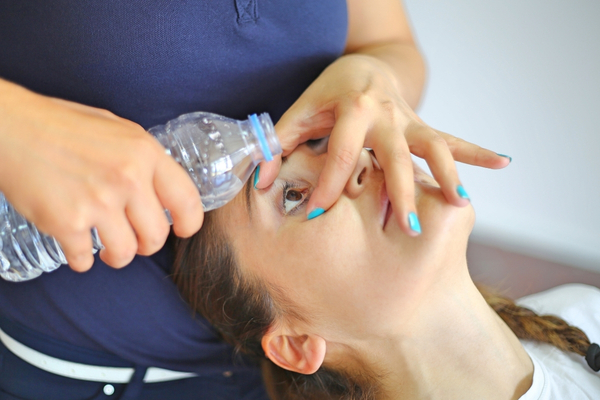
Flush the affected eye
Use clean water or, preferably, sterile saline if available. Keep the injured eye facing downwards while flushing.
Seek medical advice if the problem persists
If the object remains in the eye or irritation continues, seek medical assistance.
If the object remains in the eye or irritation continues, seek medical assistance.
These steps are only suitable for small foreign objects that are not sharp or embedded.
How can you tell if an eye injury is serious?
Eye injuries can cause a range of signs and symptoms, including:
- Pain or irritation in the eye
- Impaired vision or loss of vision
- Swelling or closure of the eye
- Blood or fluid coming from the eye
- Excessive tearing
- Sensitivity to light
- Bleeding within the eye
- A visible foreign object in the eye
Eye injuries can potentially cause permanent visual impairment, so seek medical advice promptly if you are concerned about an injury.
If an injury appears severe, avoid repeatedly examining the eye.
What should you do if an object is embedded in the eye?
Do not attempt to remove an embedded object. The injured eye needs to be protected without applying pressure to the object or eyeball.
- Keep the person still and comfortable.
- Protect the injured eye by placing a protective cover or cup around and over the eye without applying pressure.
- Minimise eye movement and encourage the person not to blink or move either eye.
- Cover the uninjured eye where possible to reduce movement of both eyes.
- Seek urgent medical aid.
What if the injury involves chemicals or burns?
Chemical and heat burns to the eye require immediate action, within seconds. Unlike a loose particle of dust or debris, these injuries can cause serious damage and need urgent medical attention.
If a chemical enters someone's eye:
- Immediately flush the affected eye with cool running water for 20 minutes.
- Tilt the head towards the injured side to prevent chemicals washing into the unaffected eye.
- Gently hold the eyelids open while flushing, if necessary.
- Call Triple Zero (000) for emergency assistance.
Do not delay flushing while waiting for medical help. Continue flushing while assistance is being arranged.
If this has made you think twice about how you'd respond to an eye injury, practical first aid training can help you build the skills to act.
Learn first aid with Royal Life Saving WA
Royal Life Saving WA is a Registered Training Organisation (RTO 0854) providing nationally recognised first aid training in Perth and across Western Australia, including HLTAID011 Provide First Aid.
The HLTAID011 Provide First Aid course covers life-threatening and non-life-threatening bleeding, alongside DRSABCD, CPR and AED use and a range of other first aid emergencies.
Royal Life Saving WA's current HLTAID011 course combines approximately 3-4 hours of online learning and assessment with one day of face-to-face training and assessment, giving participants the opportunity to put first aid knowledge into practice. Courses are conducted in Perth and other locations across WA.
Explore HLTAID011 Provide First Aid courses with Royal Life Saving WA
Eye Injury FAQs
Can you remove contact lenses after an eye injury?
If you wear contact lenses, you can take them out if it's easy to do so. Don't try to remove someone else's contact lenses, and never remove them if the surface of the eye is badly injured.
What if you can feel something in your eye but can't see anything?
If you suspect a small, loose particle, try blinking several times and flushing the eye with clean water or sterile saline. If the sensation continues, seek medical advice rather than repeatedly touching or examining the eye.
Where can I complete first aid training in Perth?
Royal Life Saving WA provides HLTAID011 Provide First Aid and HLTAID014 Provide Advanced First Aid training in Perth and other locations across Western Australia through RTO 0854.