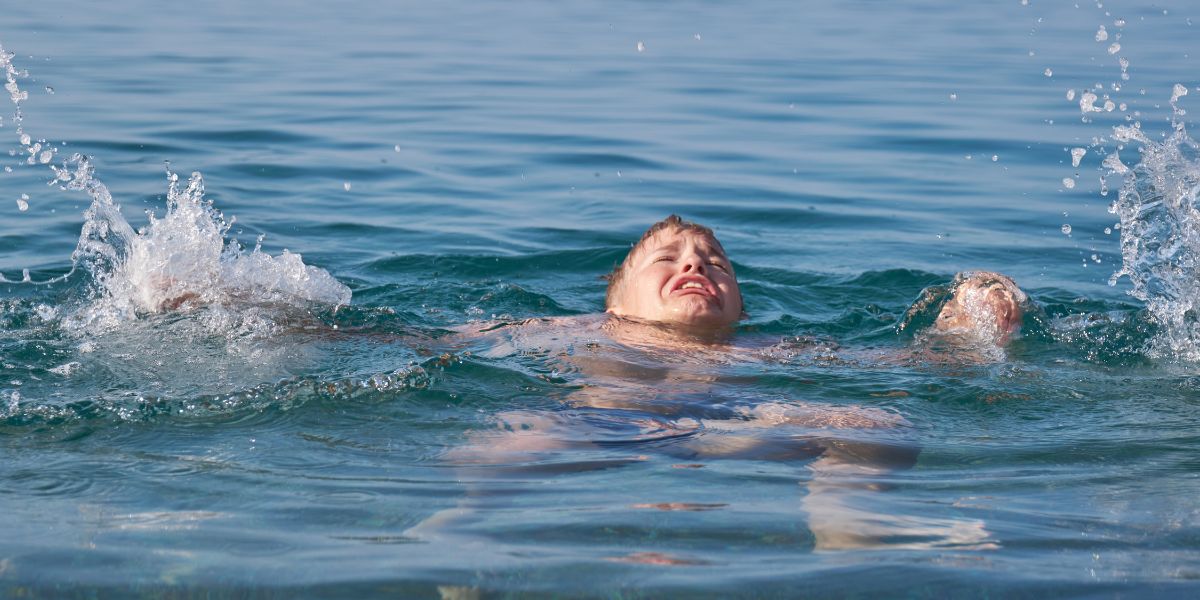
Drowning occurs when water enters the airway and prevents the body from getting enough oxygen.
Drownings can be fatal or non-fatal. Non-fatal drowning occurs when a person survives the incident, however they may experience ongoing health complications related to the drowning event.
It is important to understand that drowning can happen quickly and silently. For adults, a non-swimmer can keep themselves at the surface of the water for 20 to 60 seconds. For children, this time is often shorter.
Maintaining your own safety
Your first priority during a drowning is to ensure you do not become a casualty. Only attempt a rescue if you can do so without putting yourself in danger.
A person in trouble in the water may panic and try to grab, climb or push down on you in an attempt to stay afloat. There may also be natural hazards such as strong currents, waves, submerged objects or deep water.
Always call for assistance before attempting a rescue, and if possible reach or throw something to the person so you can pull them to safety without entering the water.
If you must enter the water, take a flotation aid with you. If you are not a strong swimmer and do not have a flotation aid, do not enter the water.
Signs and Symptoms of drowning
- Difficulty or abnormal breathing
- Bluish tint to the skin of the face, especially around the lips
- Cold skin and pale appearance
- Persistent coughing or vomiting
- Chest pain
- Confusion or altered consciousness
- Loss of consciousness
- No breathing
Prevention
Most drowning incidents can be prevented through effective supervision, safe behaviour and awareness around water.
- Actively supervise children in and around water
- Avoid alcohol and drugs around water
- Learn swimming and water safety skills
- Wear a lifejacket when boating or fishing
- Swim at patrolled beaches and aquatic facilities
- Be aware of conditions such as currents, depth, and water temperature
Treating a suspected drowning
- Call 000 for an ambulance
- Follow the DRSABCD Action Plan
- If there is water or vomit in the mouth or throat, roll the person into the recovery position to help clear the airway
- If the person is not breathing normally, commence CPR
Note: In drowning cases, provide 2 rescue breaths before starting chest compressions to deliver oxygen to the bloodstream as early as possible.
Learn more and test your knowledge on first aid for drowning
The Bronze Medallion by Royal Life Saving WA teaches you how to recognise risks, perform safe rescues, and provide CPR when it counts. Sign up for a Bronze Medallion course today and take the next step toward becoming confident and capable in an emergency.