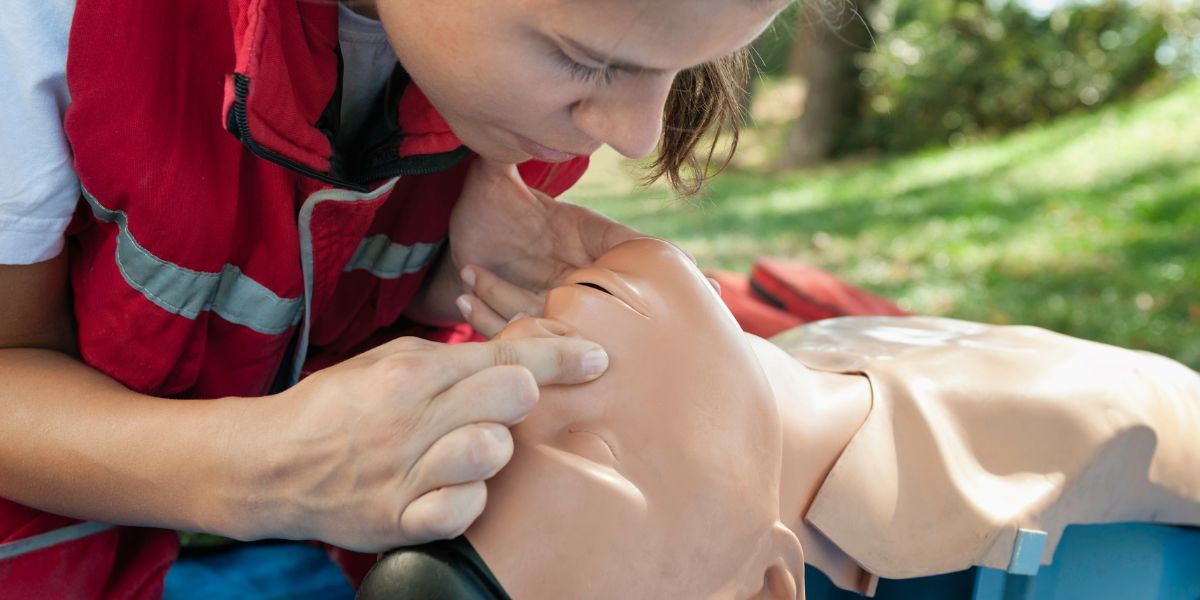
Why rescue breaths still matter in CPR
You may have heard discussion that CPR can be performed without rescue breaths, also known as mouth-to-mouth. This idea has gained attention in the USA, where some emergency services have promoted chest-compression-only CPR advice for untrained bystanders over the phone. But this message has caused confusion, especially for people learning CPR in Australia.
Rescue breaths have not been removed from CPR and remain necessary whenever they can be safely provided. If a person is unresponsive and not breathing normally, bystanders should follow the DRSABCD Action Plan and call Triple Zero before beginning CPR as soon as possible.
When chest compressions aren't enough
Chest compressions and rescue breaths serve different but equally important purposes during CPR. Chest compressions circulate blood around the body, while rescue breaths help deliver oxygen into the lungs. This is critical to provide the brain and vital organs with oxygenated blood needed to survive.
Rescue breaths are particularly important in drowning emergencies and incidents involving infants or children. In these situations, sudden collapse is often caused by oxygen deprivation rather than a cardiac event.
For this reason, rescue breaths remain an essential part of CPR whenever they can be safely provided.
The role of compression-only CPR
Compression-only CPR may be better than doing nothing if someone is untrained, unable or unwilling to give rescue breaths. However, it should not be treated as the standard approach, especially by trained first aid providers.
If you are worried about giving mouth-to-mouth, consider carrying a CPR mask or face shield. These small barrier devices can fit in your car, first aid kit or on a keyring and can give you the confidence to provide rescue breaths when someone needs them.
Refresh your CPR skills today and make sure you know how to respond in an emergency.