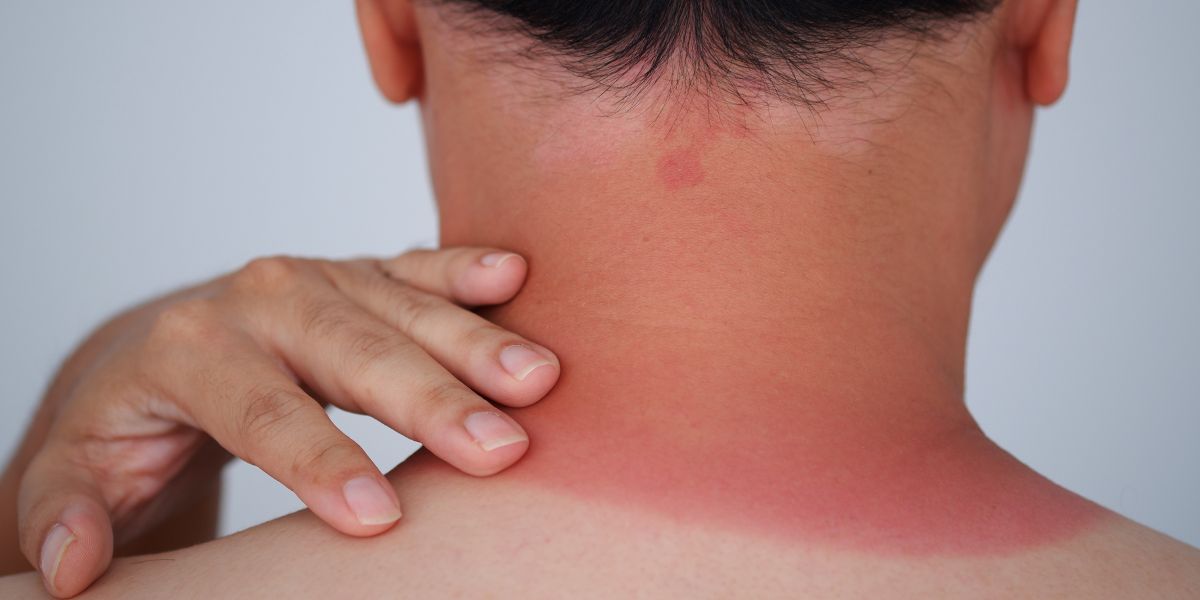
 Sunburn occurs when the skin is damaged by overexposure to ultraviolet radiation from the sun. It is most common and often most severe in summer, particularly around midday when UV levels are highest, and can range from mild redness and discomfort to severe blistering and pain.
Sunburn often happens during outdoor activities, even when exposure feels brief or conditions seem mild. Repeated or severe sunburn increases the risk of long-term skin damage, dehydration and skin cancer.
Symptoms
- Red, painful or warm skin
- Swelling or tenderness
- Blistering in severe cases
- Peeling or flaking skin
- Signs of dehydration such as dry mouth or reduced urination
Prevention
The best way to prevent sunburn is to limit exposure to direct sunlight, especially during peak UV hours. Wearing protective clothing such as long sleeves, loose-fitting garments, and a wide-brimmed hat helps shield the skin.
Apply a broad-spectrum sunscreen to exposed skin and reapply regularly, particularly after swimming or sweating. Seeking shade whenever possible and staying well hydrated also reduces the risk of sunburn.
Some prescription and non-prescription medications can make skin more sensitive to sunlight. When taking these medications or using these products, avoid direct sunlight where possible and check labels or speak with a pharmacist or health care provider for advice.
Treating sunburn
If sunburn occurs, begin cooling the affected area as soon as possible. Run the skin under cool water for at least 20 minutes or have regular cool showers or baths. Applying cold compresses can also help reduce pain and inflammation.
Sunburn draws fluid toward the surface of the skin, increasing the risk of dehydration. Drinking plenty of water over the following days is important. Watch for signs of dehydration such as dizziness, dry mouth, lethargy, or reduced urination.
As the skin heals, it will need moisture to prevent excessive dryness and peeling. Using a plain, water-based moisturiser or aloe vera can help soothe the skin. Spray-on moisturisers may provide relief without the need to rub sensitive areas.
Avoid further sun exposure while the skin recovers. If going outdoors is unavoidable, cover up with loose-fitting clothing, wear a hat, apply sunscreen, and stay in shaded areas as much as possible.
Seek medical advice if the sunburn is severe, blistering is extensive, or if symptoms such as nausea, dizziness, headaches or general illness develop.
What NOT to do
- DON'T use harsh soaps, ointments or fragranced creams on sunburnt skin
- DON'T rub, scrub or pick at peeling skin
- DON'T burst blisters
- DON'T return to sun exposure until the skin has healed