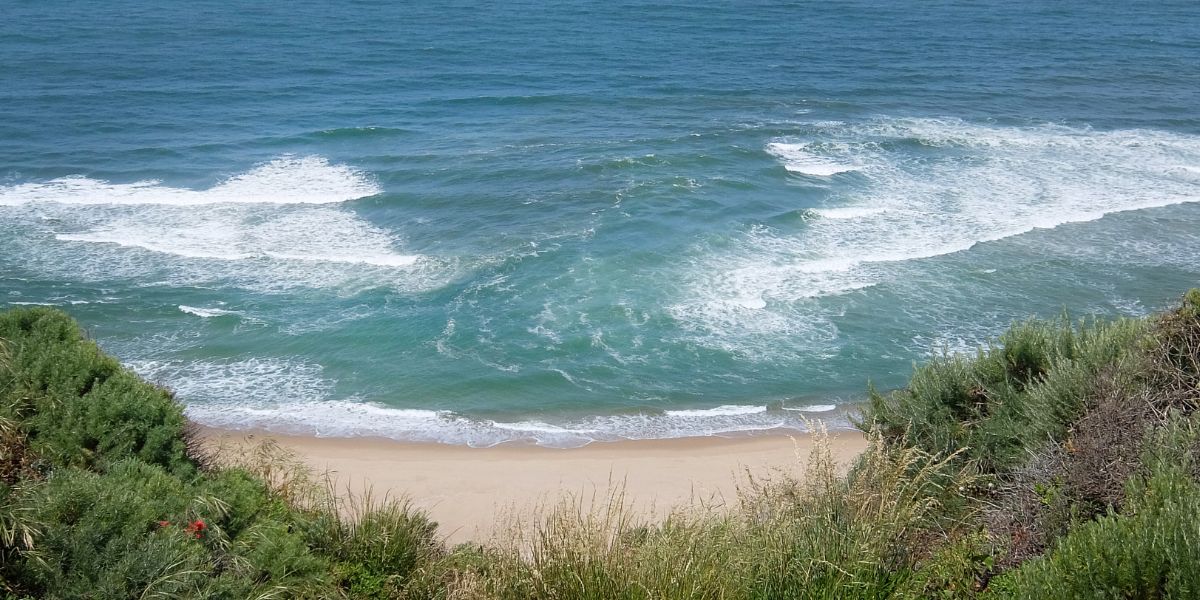
 Rip currents, often called just rips, are one of the most serious hazards on Australian beaches and are a leading cause of drowning. They can form quickly, change location, and are often difficult to recognise, even for experienced beach users.
A rip current is a strong channel of water that flows away from the shore toward deeper water. Rips do not always look dangerous. In fact, they can appear calmer than the surrounding water making them easy to miss
How to spot a rip current
- Darker or deeper-looking water
- Fewer or no breaking waves
- A rippled surface surrounded by smoother water
- Murky or sandy water extending beyond the breaking waves
- Foam, debris or seaweed moving out to sea
Not all rips show every sign at once. It can help to first identify where waves are breaking consistently, then look to either side where waves are not breaking. These areas are often rip currents.
What to do if you get caught in a rip
- Stay calm and do not panic
- Float on your back to conserve energy
- Raise one arm and call out to signal for help
- Wait for assistance from a lifeguard or lifesaver
If you find yourself being pulled away from the shore, try to stay calm. Rip currents may sometimes circulate and carry you toward a sandbar or shallower water. If you are a strong swimmer and not tired, you may be able to swim parallel to the shore or toward breaking waves to escape the rip. However, swimming directly against the rip can quickly lead to exhaustion.
Staying safe at the beach
The safest way to avoid rip currents is to always swim between the red and yellow flags, where conditions are monitored by Surf Life Saving patrols. If no flags are present, take time to assess the water before entering and avoid areas where rips may be present.
For more information visit the Surf Life Saving Australia webpage below.