SAFEGUARDING CHILDREN AND YOUNG PEOPLE
It is imperative a safe and supportive environment is provided for children and young people, that focuses on fun, education and building the confidence of our people through positive learning and development.
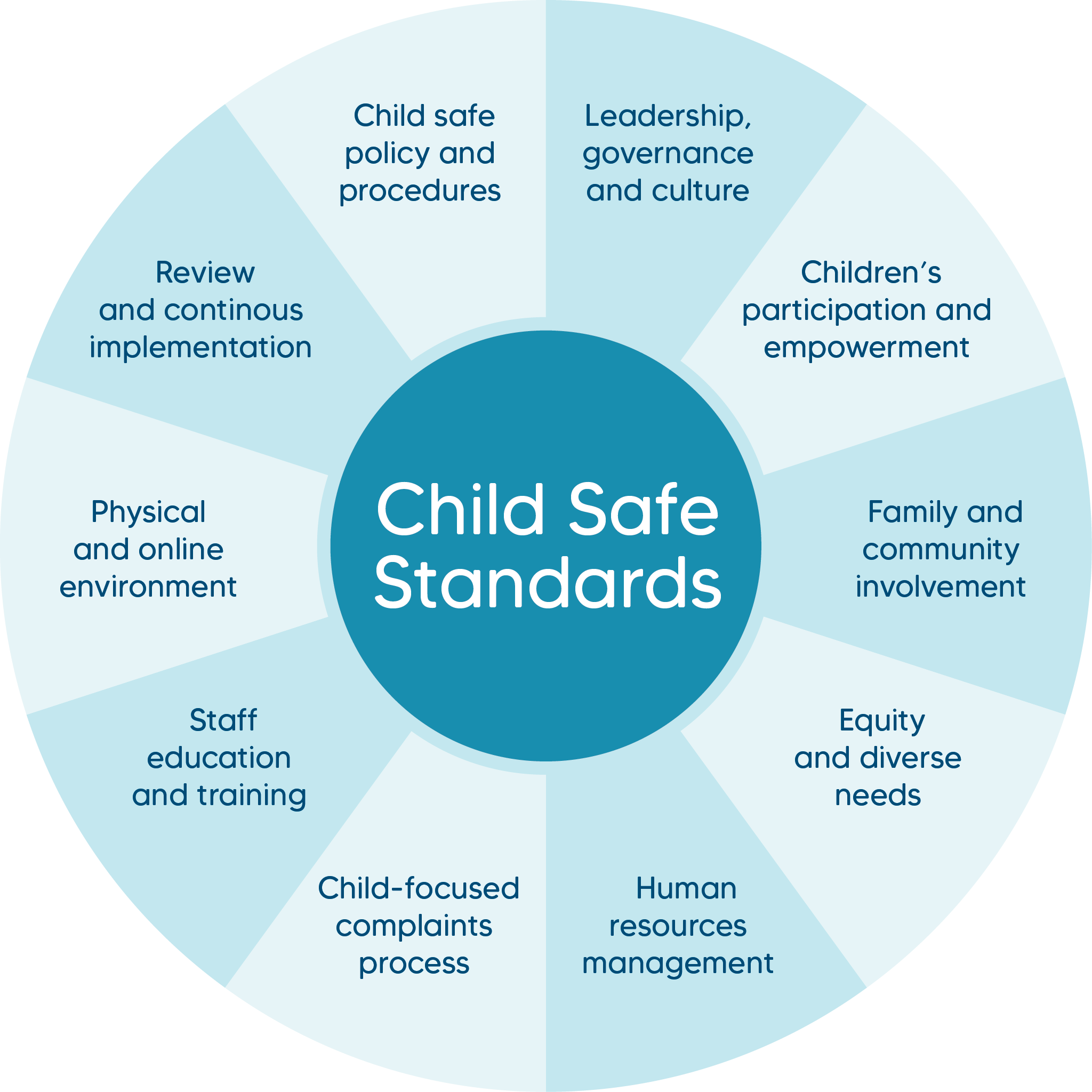
Every organisation should have a commitment statement and/or safeguarding children policy, using the ten Child Safe Standards as best practice to guide and drive performance.
The 10 Child Safe Standards are:
- Standard 1: Child safety is embedded in institutional leadership, governance and culture
- Standard 2: Children participate in decisions affecting them and are taken seriously
- Standard 3: Families and communities are informed and involved
- Standard 4: Equity is upheld and diverse needs are taken into account
- Standard 5: People working with children are suitable and supported
- Standard 6: Processes to respond to complaints of child sexual abuse are child focused
- Standard 7: Staff are equipped with the knowledge, skills and awareness to keep children safe through continual education and training
- Standard 8: Physical and online environments minimise the opportunity for abuse to occur
- Standard 9: Implementation of the Child Safe Standards is continuously reviewed and improved
- Standard 10: Policies and procedures document how the institution is child safe.
For an organisation to be truly “child safe”, it must have a planned and intentional approach to safety.
This must include good practices around appointment of staff and volunteers, training of those people, and measures to keep programs and the physical location of activities safe for children and vulnerable people.
It is everyone’s responsibility to help protect children and young people and report any suspected child or young person abuse to a person of authority.
You must check your State or Territory’s legislation and policies.