THE ENVIRONMENT
Environmental factors can influence and impact learning particularly for students with a disability. Considerations for health, safety and comfort should be assessed and reasonable adjustments made for optimal learning.
Teachers and program deliverers need to consider the various environmental factors that can impact a student’s aquatic experience alongside the student’s needs and lesson requirements prior to the program or lesson commencing.
|
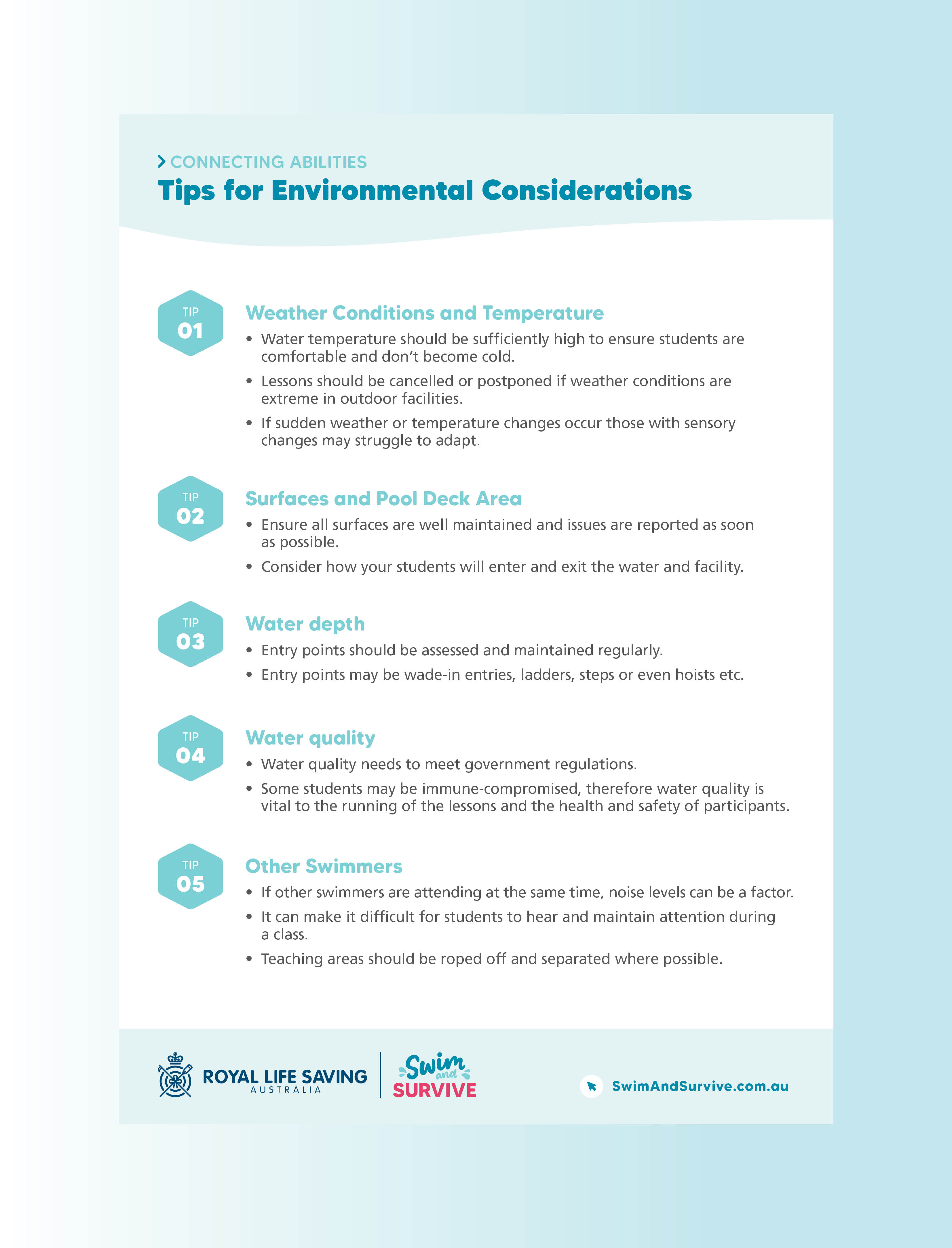
Weather Conditions and Temperature Lessons should be cancelled or postponed if weather conditions are extreme. This can include high heat, storms with heavy rain and lightning. (appropriate evacuation must be implemented for lightning) Where possible, the pool should be protected from the wind, as wind chill can cause a loss of body heat rapidly. Water temperature should be sufficiently high (recommended minimum of 30-34 degrees) to ensure students are comfortable and don’t become cold. People with disabilities can have challenges regulating their body temperature therefore the pool temperature is critical for their learning environment. If sudden weather changes occur those with sensory changes may struggle to adapt therefore it is important to be able to read the individual signs from your students. Those with Sensory Challenges may find sudden weather changes difficult to adjust too and therefore may struggle to adapt. |
|
Surfaces and Pool Deck Area Surfaces in the pool environment can be high risk for slips, trips and falls at any time. This also applies to change rooms and access areas. Ensure all surfaces are well maintained and issues are reported as soon as possible. Consider your students (and their parents and carers) path to the pool, how they will enter and exit the water, and any risks related to their mobility and balance such as walker, cane, wheelchair or even an assistance dog. This can also extend to facility access. |
|
Water Depth Entry points should be assessed and maintained regularly. Whether these are wade-in entries, ladders, steps or even hoists etc. A shallow pool is needed for beginners and a deeper pool as students progress with their stroke development or requiring the depth for movement. If correct depth is not allocated this can affect the activities and the development of skills. |
|
Water Quality Water quality needs to meet government regulations. Swimming facilities have processes to meet these standards, but if teaching in natural environments this needs to be considered. Some students with disabilities are highly immune-compromised, therefore water quality is vital to the running of the lessons. A shallow pool is needed for beginner swimmers and a deeper pool as students progress with their stroke development or requiring the depth for movement. If correct depth is not allocated this can affect the activities and the development of skills. |
|
Other Swimmers If teaching at a facility where other swimmers will be attended at the same time noise levels can be a factor. It can make it difficult for students to hear and maintain attention during a class. Teaching areas should be roped off and separated where possible. |