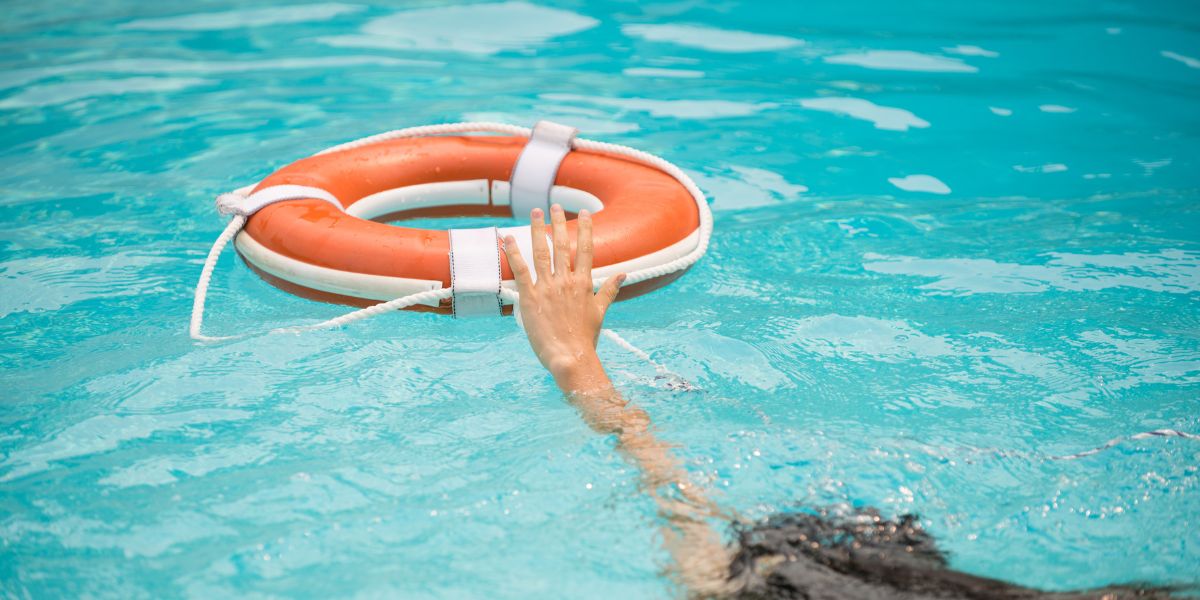
 Whether during recreation activities or after an accidental fall, there can be situations where we are faced with having to perform aquatic rescues.
The order of rescue sequence suggests the best approach for a rescue, starting with the safest options and moving towards those that carry more risk. A rescuer should only move to the next option when the previous one has been deemed not possible or has failed.
Knowing how to respond in a safe way ensures the best outcome for both the rescuer and the person requiring rescuing. Below are 7 techniques for dry and water-based rescues and how to use them while minimising personal risk.
Dry rescues
Talk
If the person is conscious and able to respond, give clear verbal instructions or use hand signals to guide them to safety. This could include instructing them to float, move to shallower water or follow a safe path towards land. This works when they are close enough to hear or see you.
Communication should continue throughout any rescue attempts, making sure the person knows what to do and feels supported.
Reach
If the person is close enough, use an aid or your arm to reach out and tow them towards the edge and to safety. Always lie down during a reach rescue to reduce the chance of falling in. Aids can include rope, a stick, a towel, clothing or any other suitable item nearby.
Throw
If the person is too far away to reach, start by throwing them a buoyant object such as a lifejacket or lifebuoy they can hold for support. If needed, you can then use a rope throw to reach and pull them to safety.
Water rescues
Wade
As a rescuer, the water should only be entered if all dry options are ineffective.
Slowly wade into the water carrying a buoyancy aid. Once close enough, either reach or throw the aid to the person and help them back to land. Only enter the water if the water depth, currents and conditions are known.
Row
If wading is unsafe or the person is farther out, use a watercraft such as a canoe, kayak, small boat or rescue board. Staying in a vessel keeps the rescuer out of direct danger. Make sure you are aware of the craft’s stability and limitations before approaching.
Swim
Swim out only when prior techniques cannot help and you are confident in your swimming ability. If possible, you should swim out to the person in difficulty and pass them a buoyancy aid while maintaining a safe distance, and accompany them to safety.
Tow
If the person cannot return on their own with a buoyancy aid, attempt a non-contact tow by instructing them to hold onto the aid and guide or pull them back to safety.
A contact tow is the final option. This requires strong swimming skills, confidence and good physical condition. Contact rescues should be used only when necessary, as it involves the highest risk.
Why order of rescue matters
The key to performing any rescue safely is self-preservation. It is important to avoid putting yourself in danger by performing the safest rescue possible. Rescues that can be performed from the land without getting in the water are the safest:
- They protect the rescuer first. You are more able to help when you stay out of danger.
- They reduces the chance of panic contact as a distressed person may grab at a rescuer in the water which puts both at risk.
- They reduce the chance of the rescuer also getting into trouble and requiring rescue.
If you are interested in learning more about completing rescues and becoming a qualified lifesaver, visit our Bronze Medallion training course at the link below.