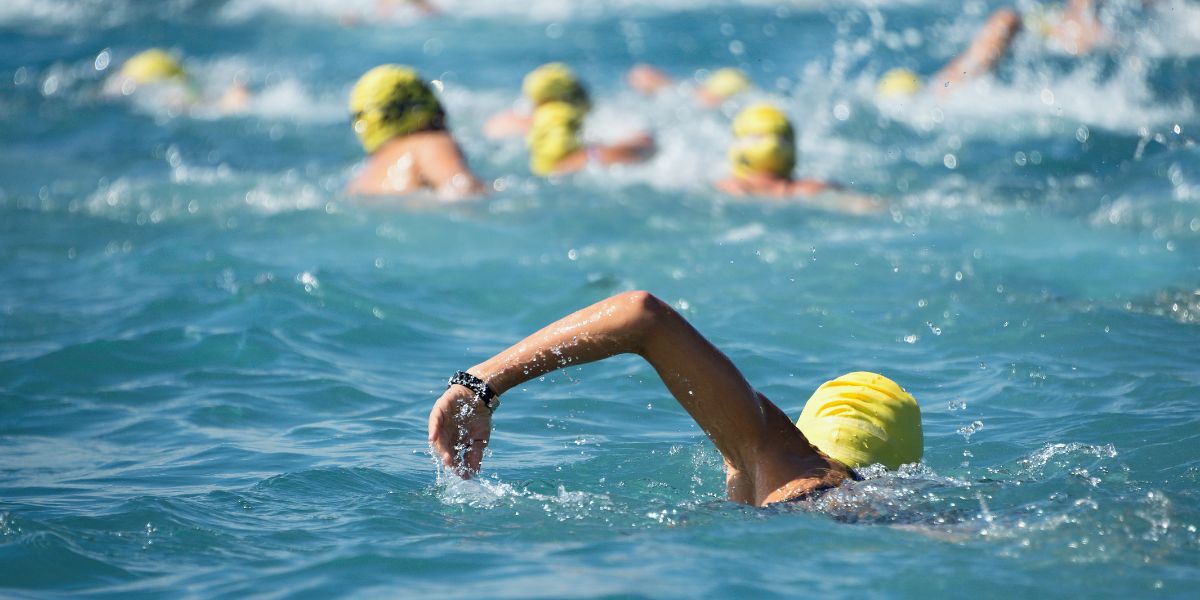
 Whether you’re gearing up for a challenge like the Rottnest Channel Swim or you simply love a weekend ocean swim, open water swimming can be hugely rewarding. It is a great way to build fitness, improve your mental health, and meet like-minded people.
A little preparation goes a long way. These tips will help you stay safe, feel confident and enjoy every stroke, no matter your experience or the distance you plan to swim.
1. Drink H20 before you go
Good preparation starts before you even get your feet wet. Staying hydrated is essential, especially in the water where it’s easy to lose fluids without noticing. Have a good drink before and during your swim if possible and consider electrolytes to help maintain fluid balance and reduce the risk of cramps.
2. Breathe both ways
Breathing on both sides helps you adapt to waves and swell that can come from any direction. It also makes it easier to breathe away from nearby swimmers when things get crowded.
3. Lift and look
4. Mix it up
Nothing replaces time spent swimming in open water, but pool sessions can offer an opportunity for refining technique, building fitness and practicing skills that are harder to focus on when also combatting weather conditions.
5. Wear bright colours
Visibility matters in the open water. Brightly coloured swimwear and swim buoys help boats, other swimmers and people on shore see you clearly if you get into trouble.
6. Check your limits
Be honest with yourself before heading out. Your health, energy levels, and overall wellbeing all play a role in how safely you can swim. Feeling unwell, overly tired, or affected by medication can impact balance, strength, and judgement.
Stick to swimming parallel to the shore rather than heading out into deeper water, and if something feels off, trust that instinct and stay out.
7. Don’t go it alone
Having someone else nearby can be lifesaving if something goes wrong. Swimming with a partner or choosing a lifeguarded beach means help is close at hand if you need it.
8. Prepare for the conditions
Before you get in the water, always take time to check the conditions. Look at the weather forecast, read safety signage and speak with local lifeguards if they are available.
Conditions can change quickly, even when everything looks calm at first glance. The Bureau of Meteorology is a reliable source for up-to-date weather information, and it is well worth checking before you head out.
Planning your next open water swim?
Before your next swim, take a moment to check the conditions, check yourself and choose the safest option available. Learn more about how to Make the Right Call and put safety first every time you swim.